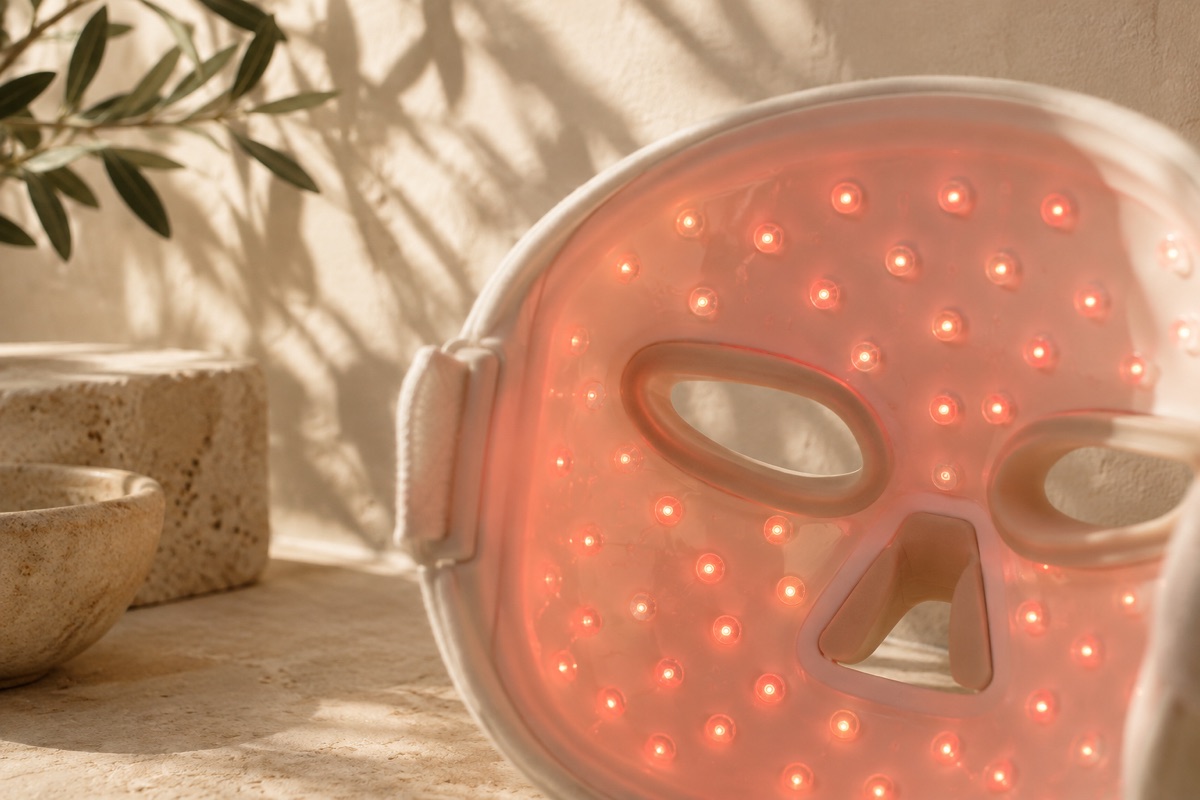
Science & Evidence
Does any red light work for red light therapy?
A red light is not automatically red-light therapy. A device intended for photobiomodulation must deliver a suitable wavelength, enough irradiance, a defined.
The science
A clear, evidence-based guide to the science behind LED face masks: what the research shows, how different wavelengths work, and what to realistically expect from at-home devices.

Key takeaway
Research suggests that specific wavelengths of light can interact with skin cells, helping to support collagen production, reduce inflammation and improve overall skin appearance.
Stimulates cellular activity
Light energy is absorbed by skin cells, supporting natural repair processes.
Supports collagen production
Red and near-infrared light may help increase collagen and elastin.
May reduce inflammation
Can help calm redness and support a more even skin tone.
Improves overall skin appearance
With consistent use, many people notice smoother, brighter-looking skin.
Different wavelengths
Each wavelength of light penetrates the skin at a different depth and has different potential benefits.
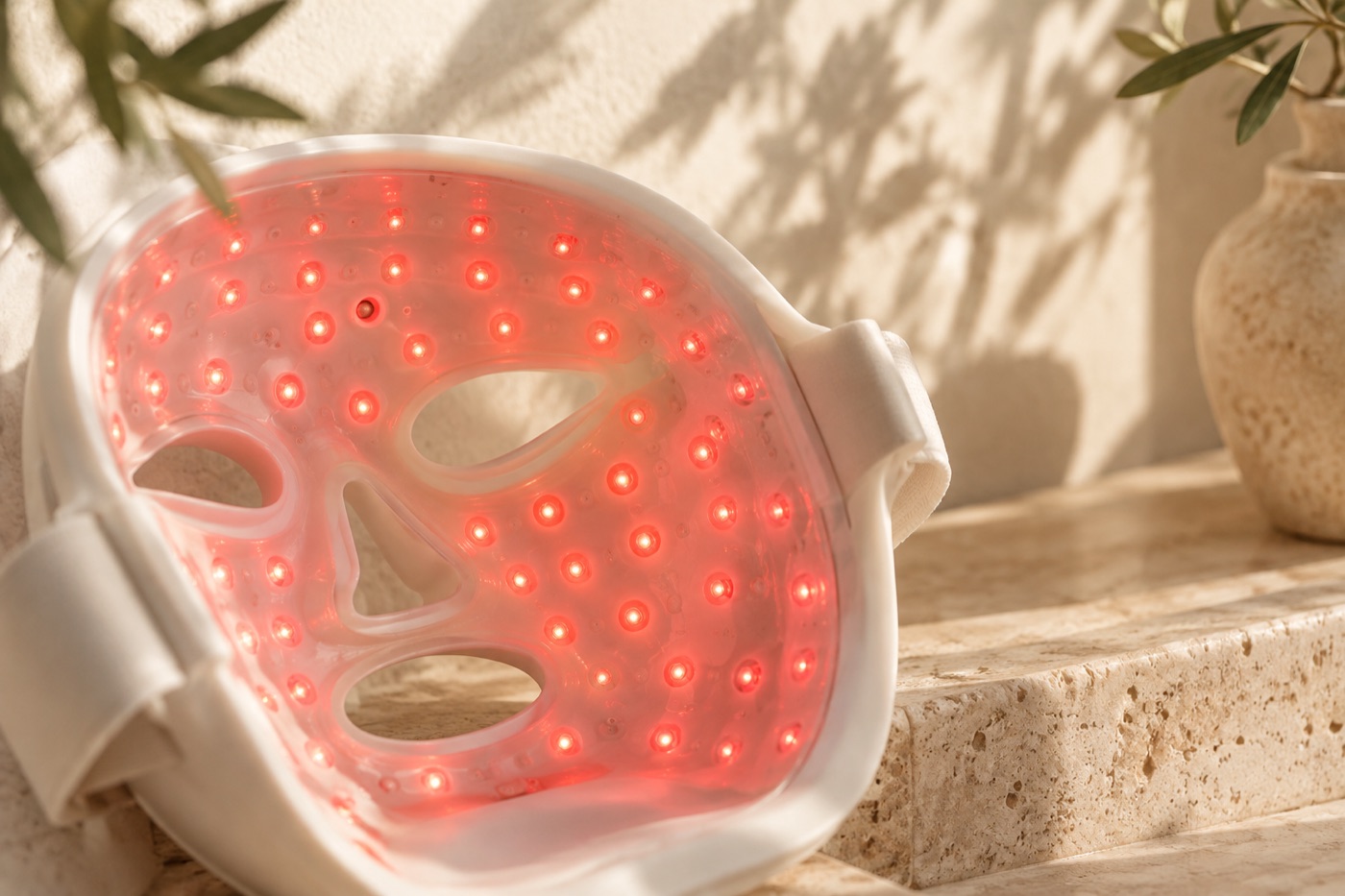
How deep does the light go?
Blue light works closer to the skin surface, while red and near-infrared light can penetrate deeper, where they may help support collagen, reduce inflammation and promote skin repair.
Does red light carry any UV?What the research shows
Studies suggest that LED light therapy can help with fine lines, skin texture, redness and acne. While results are promising, it is important to have realistic expectations and understand the current limitations of the research.
What looks promising
Improved skin texture, increased collagen, reduced inflammation and potential benefits for acne.
Where research is limited
Long-term effects, optimal treatment protocols and direct comparisons between at-home devices.
What to keep in mind
Results vary between individuals and devices, and LED therapy is not a substitute for professional medical care.
Science & Evidence
A red light is not automatically red-light therapy. A device intended for photobiomodulation must deliver a suitable wavelength, enough irradiance, a defined.
Science & Evidence
Standard red light therapy is not a UV tanning treatment. It uses red or near-infrared light instead of the ultraviolet radiation that causes a conventional.
Science & Evidence
Standard red light therapy is not a source of ultraviolet (UV) rays.